Strategic CFO & Growth
Real margin per SKU, per channel
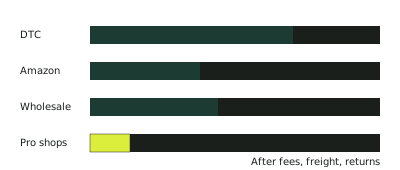
The same paddle can earn a healthy margin on your website, a thin one on Amazon, and very little through a retail partner. Most brands only see the average.
The problem a generic accountant misses
A standard P&L reports one gross margin for the whole business. It blends every channel together and usually leaves out costs that belong to the unit: marketplace referral fees, fulfillment fees, payment processing, returns, discounts, and the landed cost behind the product itself.
 Open diagram as SVG
That average hides the decisions that matter. It will not tell you that a best-selling SKU loses money after Amazon fees, that a wholesale price was set from factory cost instead of landed cost, or that a promotion wiped out the margin on a colorway. Without channel-level numbers, growth can make things worse.
What we do
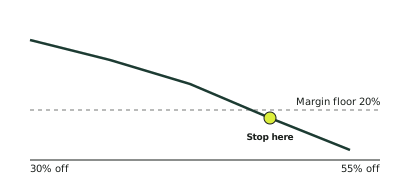
We calculate the true contribution of every SKU in every channel. We start from landed cost, then subtract what each channel charges: payment processing and shipping on Shopify, referral and FBA fees on Amazon, and trade discounts, freight and payment terms in wholesale. Returns and discounts are included, and marketplace fees are calculated on net revenue after discounts, which is how Amazon and Shopify actually charge.
 Open diagram as SVG
You see, for each product, what it earns wherever it sells. From there we help you act: repricing, shifting inventory between channels, renegotiating wholesale terms, or retiring products that cannot earn their place.
Consider a paddle that sells well on Amazon. Once referral fees, fulfillment fees, storage and returns are counted against its landed cost, it may contribute far less than the same paddle sold on your own site, even at a lower price. Seen side by side, those differences change where you spend on advertising, which channel receives the next shipment, and what you quote a retailer. The goal is not simply higher margins on paper, but a catalog in which every product and every channel is doing a job you understand.
How It Works
How it works
 Open diagram as SVG
Gather the data
We collect your catalog, pricing, factory costs and channel reports.
Build landed cost
Freight, duties and setup are allocated to each SKU.
Model each channel
Fees, returns, discounts and fulfillment costs are applied channel by channel.
Recommend
We present the results and the specific changes that would improve your margin.
Deliverables
What you get
- 01Landed cost for every SKU
- 02Contribution margin per SKU for DTC, Amazon and wholesale
- 03Break-even price by channel
- 04A clear list of margin leaks and where they come from
- 05Pricing and channel recommendations
- 06A model you can update as costs and prices change
Plans
Which plan includes it
Unit economics analysis is part of Third Shot ($1,000–$1,500/month). Full multi-channel margin optimization is included in Kitchen Line ($2,000–$2,900/month). Compare plans.
These numbers depend on accurate costs; see Inventory Bookkeeping & Landed COGS.
Starts in
Third Shot$1,000–$1,500/month. Full multi-channel optimization in Kitchen Line.
Compare plans →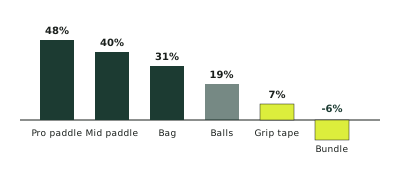 Open diagram as SVG
FAQ
Frequently asked questions
Yes. The Landed COGS Calculator works out the unit economics of one SKU in your browser, with no email required. The Free Margin Leak Check covers your whole catalog, built by hand and emailed within five business days.
A short form covering your brand profile. We follow up for the pricing and cost detail needed to build the model.
Yes. The spreadsheet is yours whether or not you become a client.
At least quarterly, and whenever freight rates, factory pricing or marketplace fees change.
Start with one SKU, or your whole catalog
Send us your top SKU's pricing and we will build the model first, before you commit to anything. Use the Landed COGS Calculator for a single paddle, or send us your catalog through the Free Margin Leak Check.
Prefer a conversation? Book a strategic call with Muhammad Ali, ACA.